23 Oct 2026
Tracing the Sequence of Milestones That Shaped Contemporary Rest Tracking Standards
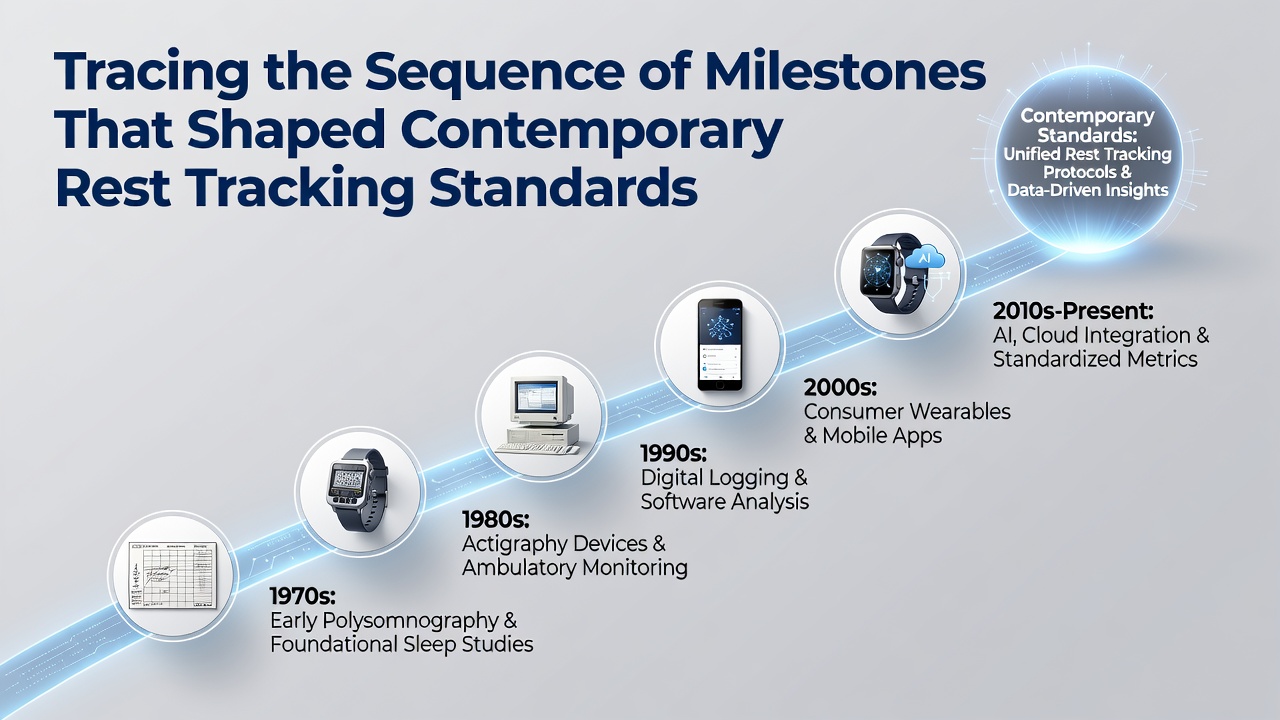
Rest tracking standards emerged from decades of medical research into sleep patterns, beginning with laboratory-based observations in the mid-twentieth century. Researchers developed polysomnography techniques during the 1950s and 1960s that combined electroencephalography, eye movement recordings, and muscle activity measurements to classify sleep stages, and those foundational protocols still influence how devices categorize rest today.
Foundational Laboratory Methods Establish Core Metrics
Scientists at various institutions refined scoring systems through the 1960s and 1970s, while the American Academy of Sleep Medicine later codified rules that defined sleep architecture in precise terms. Data collected during overnight studies revealed consistent patterns across populations, which allowed clinicians to identify deviations such as reduced slow-wave sleep or fragmented cycles. These early standards emphasized controlled environments, yet they provided the benchmarks against which all subsequent consumer technologies would measure accuracy.
By the 1980s actigraphy devices entered clinical use, and wrist-worn sensors tracked movement over multiple days to estimate sleep duration without requiring full laboratory setups. Studies validated these tools against polysomnography results, showing strong correlations for total sleep time in healthy adults while noting limitations during periods of quiet wakefulness.
Consumer Devices Enter the Market and Drive Standardization Needs
Commercial activity accelerated after 2009 when fitness trackers incorporated basic sleep estimates, and manufacturers soon faced demands for consistent data interpretation across brands. The IEEE and ISO committees began drafting guidelines for wearable sensor accuracy, focusing on motion detection algorithms and heart rate variability signals that correlate with autonomic nervous system activity during rest. Those efforts addressed discrepancies that appeared when users compared readings from different devices.
Medical Organizations Codify Updated Protocols
Updates to scoring manuals continued into the twenty-first century, and the American Academy of Sleep Medicine released revised guidelines that incorporated new sensor capabilities such as photoplethysmography. Meanwhile the European Sleep Research Society contributed position statements on ambulatory monitoring that emphasized validation across diverse age groups and clinical populations. Data from large cohort studies conducted in Canada and Australia further informed thresholds for classifying sleep efficiency and latency, creating a broader evidence base for international alignment.
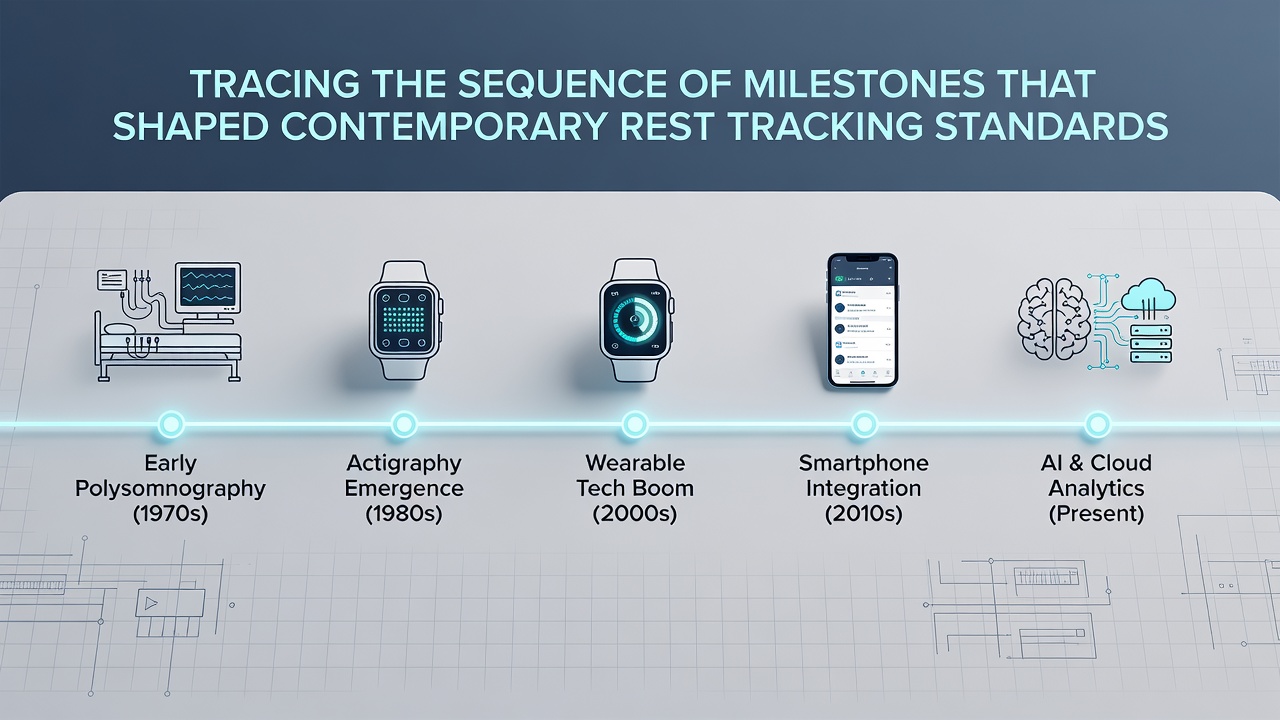
Regulatory bodies in multiple regions began evaluating sleep tracking claims, and the U.S. Food and Drug Administration cleared several algorithms for medical use by the mid-2010s. Parallel reviews in the European Union and Australia required manufacturers to demonstrate reproducibility of results under real-world conditions, which pushed companies to refine calibration methods and report confidence intervals alongside nightly summaries.
Integration of Physiological Signals Expands Measurement Scope
Contemporary standards now incorporate multiple data streams beyond movement alone, and researchers demonstrated that combining heart rate variability with temperature and respiratory signals improves detection of sleep stages. Observers note that devices released after 2020 frequently meet or exceed earlier accuracy benchmarks established in laboratory comparisons. Conferences scheduled for October 2026 will review proposed revisions that address emerging metrics such as sleep regularity and circadian alignment, drawing on datasets collected across hemispheres.
Academic consortia continue to publish validation studies that compare consumer devices against gold-standard recordings, and findings reveal that newer models achieve higher sensitivity for identifying awakenings. Those who analyze population-level trends point to improved interoperability between platforms as another milestone, since standardized data formats allow clinicians to review home-collected information alongside traditional records.
Conclusion
The sequence of milestones from laboratory polysomnography through actigraphy validation and consumer device regulation produced the frameworks that govern rest tracking today. Ongoing work by international bodies ensures that standards evolve alongside sensor technology, while scheduled discussions in 2026 will determine how new physiological indicators fit within existing protocols. Data from these collective efforts continues to shape how rest metrics are defined and applied across clinical and personal settings.